

One of the best things about padel is how little you need to get started. A racket, some balls, comfortable clothing and a decent pair of court shoes, and you are ready to play.
← Part of our complete How to Play Padel guide
- To start playing you need very little: a racket, balls, sportswear and court shoes. Four players, two rackets a side, and a ball is all a game takes.
- Your racket is the one decision worth getting right. Shape matters more than brand: round for control, diamond for power, teardrop for a bit of both.
- Expect around £30 upwards for a starter racket and roughly £10 to £15 for a tube of balls. You do not need to spend a fortune to begin.
- Most people borrow or hire a racket for their first few games, then buy once they are hooked.
If you are just starting out, you can keep things simple and borrow almost everything. But once the game gets its hooks into you, a little knowledge about the kit goes a long way, especially when it comes to choosing your first racket. Here is everything you need, what to look for, and the official rules if you ever fancy playing competitively.
Padel Rackets
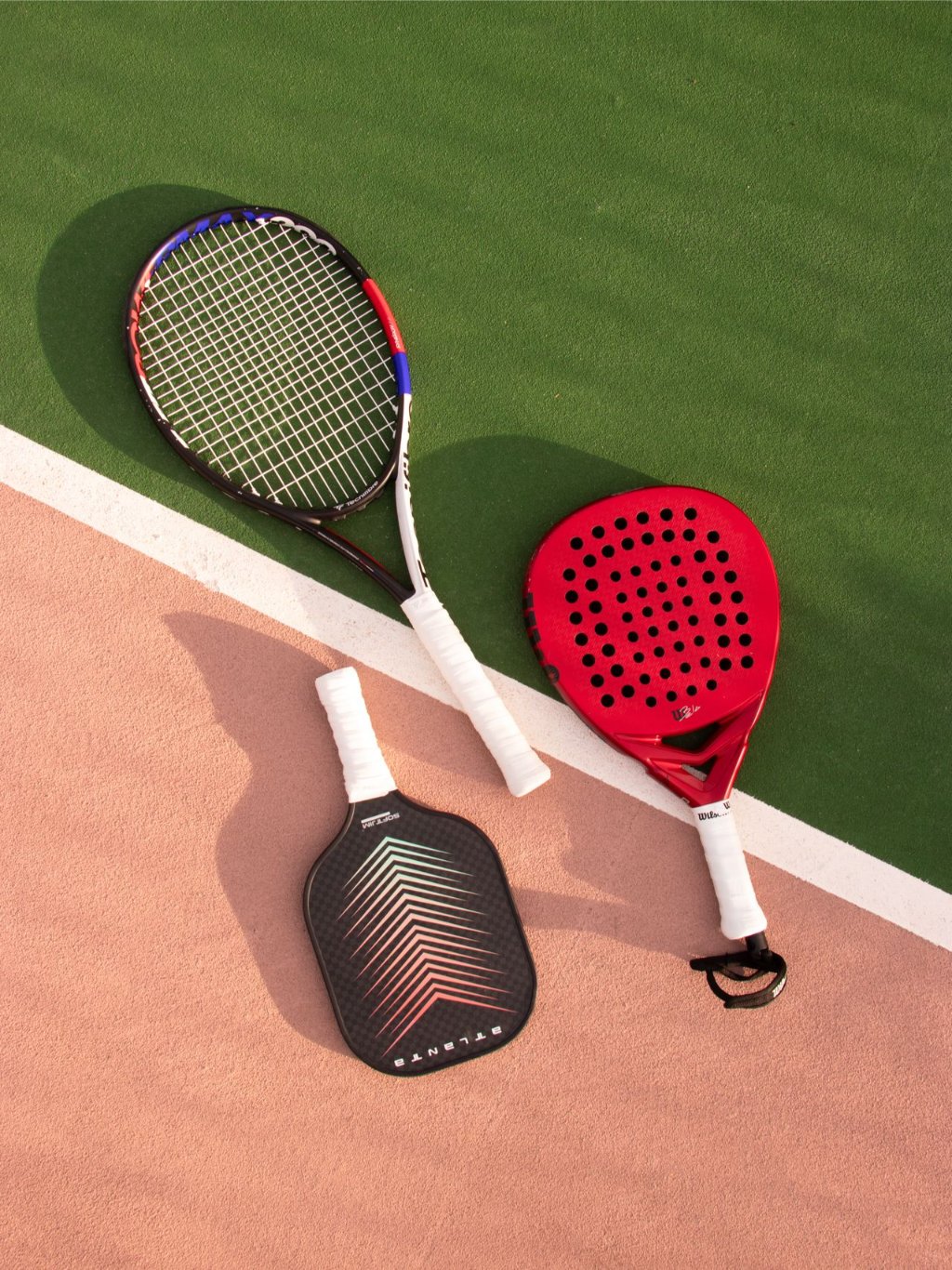
The racket is the piece of kit that affects your game the most, so it is worth understanding the basics before you buy. Unlike a tennis racket, a padel racket has no strings. It is a solid frame with a foam core and a perforated face.
That solid construction is why shape matters more than anything else, more than brand, colour or the carbon weave. The outline of the head decides where the sweet spot sits and how the racket transfers power into the ball.
The three racket shapes
Before anything else, decide on the shape. There are three, and each suits a different kind of player.
Round
Best for beginnersThe most forgiving shape. The sweet spot sits low and central, so off-centre hits are far kinder and you get more control. Ideal while you build your technique or if you play a patient, defensive game.
Teardrop
Best all-rounderThe middle ground and the most popular shape on court. The sweet spot sits a little higher, adding pop without becoming unforgiving. A natural step up as your timing improves.
Diamond
Best for power playersWeight sits high in the head for serious smashing power, but the sweet spot is smaller and less forgiving. Best left until you have some experience and solid technique.
Not sure? Start round. It is far easier to enjoy the game and improve with a forgiving frame than to fight a powerful one.
Weight, feel and budget
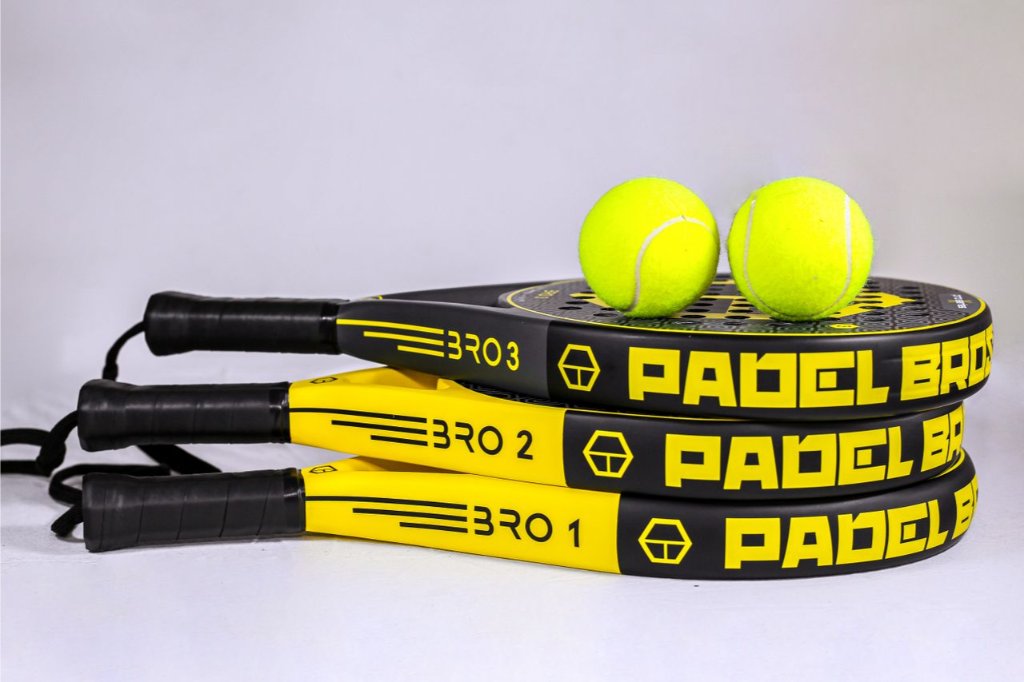
Most modern rackets weigh between roughly 355g and 375g. Lighter frames are easier to swing and gentler on the arm, which suits beginners and anyone prone to elbow trouble. A softer foam core adds comfort and forgiveness too.
You can pick up a perfectly good beginner racket from around £30. Prices climb fast once you reach carbon performance frames, but there is no need to spend big to start.
Padel Balls
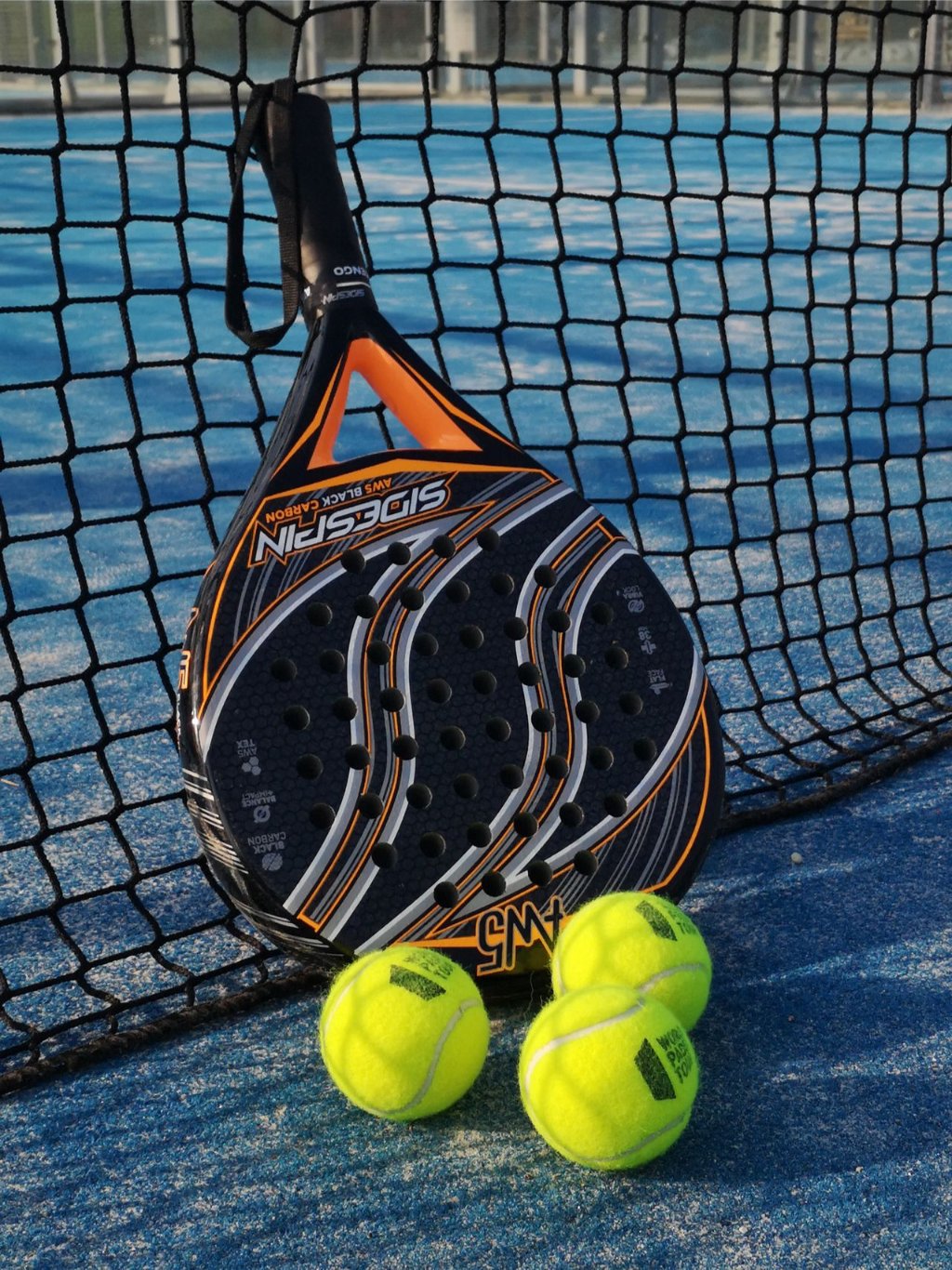
Padel balls look almost identical to tennis balls but are slightly less pressurised, which gives the game its distinctive bounce off the walls.
For casual play, any padel-specific ball does the job, and a tube of three typically costs around £10 to £15. It is worth buying padel balls rather than tennis balls, as the pressure and bounce are tuned for the way the game is played.
Clothing and Footwear
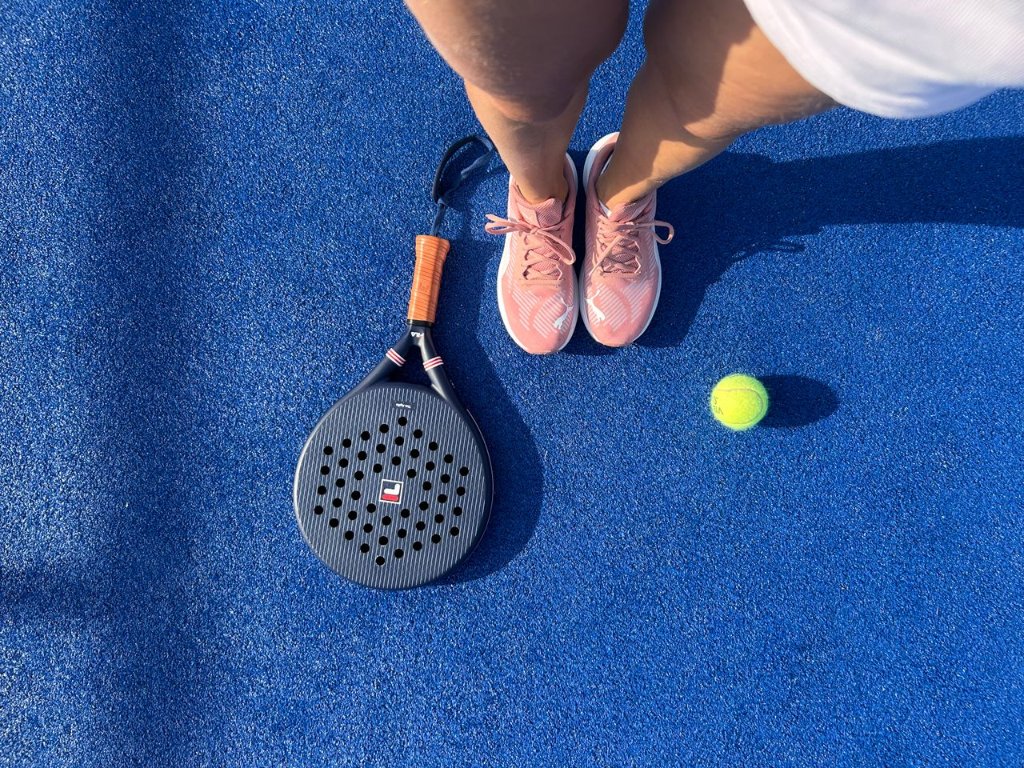
Comfortable sportswear is all you need to begin. There is no strict dress code for casual play, though sleeveless tops are not permitted in official competition.
Footwear is where it pays to take care. Padel involves quick lateral movements, sudden stops and changes of direction, so proper court shoes with good grip make a real difference to your game and your safety. For your first few games, clean trainers with a decent sole are fine, but a dedicated pair is a worthwhile early investment.
The Official Equipment Rules
For casual games these are not something to worry about, but if you plan to play competitively it helps to know the standards set by the sport's governing body, the Federación Internacional de Pádel (FIP).
Racket regulations
- Head and handle together no longer than 45.5cm, no wider than 26cm, no thicker than 38mm.
- Handle no longer than 20cm and no wider than 5cm.
- A 2.5% tolerance is allowed on thickness at an official check.
- An unlimited number of holes, each 9 to 13mm across in the central area.
- Both faces must be flat, but may be smooth or rough.
- A non-elastic wrist cord, no longer than 35cm, must be worn during play.
Ball regulations
- A rubber sphere, white, yellow or another clearly contrasting colour.
- Diameter between 6.35cm and 6.77cm.
- Weight between 56.0g and 59.4g.
- Bounces 135cm to 145cm when dropped from 2.54m onto a hard surface.
- Internal pressure between 4.6kg and 5.2kg per 2.54 square cm.
Got Your Kit? Now Find a Court
You have the racket and balls sorted, so all that is left is to get on court. Use our court finder to track down a padel club near you and start playing.
Find a Padel Court